Forty Years at Ashfield: Rev. Bill Crews Answering One Door Knock at a Time
When Rev. Bill Crews arrived at Ashfield Uniting Church 40 years ago, he did not arrive with a plan for what the next four decades would become. Instead, people began knocking on the door.
When Rev. Bill Crews arrived at Ashfield Uniting Church 40 years ago, he did not arrive with a plan for what the next four decades would become. Instead, people began knocking on the door.
One night, a couple arrived at the church in the middle of the night. Ashfield sat close to the main route between Sydney and Melbourne, and people travelling through Sydney would sometimes stop at the church looking for help. Bill assumed they needed money.
“They said, ‘Can we come inside?’ And I said yes,” he recalls.
Once inside, they asked the question that had brought them there: would he marry them?
The man's wife had died. The woman's husband had disappeared, but there was no proof of his death, and they had been unable to marry in the Catholic Church. Bill said yes.
"She just burst into tears," he says.
For Bill, it is one of many encounters across his time at Ashfield dealing with people facing grief, addiction, homelessness, uncertainty, or simply nowhere else to go
Bill came to Ashfield with experience in ministry, including time at Sydney's Wayside Chapel, but says becoming responsible for a congregation was different.
“When I came here, I'd get hit by people with all different needs,” he says.
In those early years, he often found himself asking what his mentor, Rev. Ted Noffs, founder of the Wayside Chapel, would have done.
"I used to think, 'What would Ted do in this situation?"
Ashfield quickly developed its own ministry, shaped by the people who arrived.
A woman named Barbara once knocked on Bill's door after beginning Alcoholics Anonymous. She had reached the fourth step – making a “fearless moral inventory” – and had decided Bill was the person she wanted to talk to.
They sat on the grass outside the church while she told him her story.
Bill also wanted to understand what was happening beyond the church grounds. He spent nights accompanying ambulance crews and visited Central Railway Station, then a gathering place for young people experiencing homelessness.
Police began bringing young people to Ashfield, but there was no established homelessness service waiting for them.
"So I just slept them all in the church," Bill says.
Volunteers began helping. At one stage, Bill says, the ministry was connected with 12 houses providing accommodation for people experiencing homelessness.
The work eventually became the Exodus Foundation, with the foundation stone for the building behind the church laid in September 1993.
The relationship between the congregation and the young people could take unexpected forms. Older women brought cucumber sandwiches for those staying at the church, while some of the young people helped paint the church as a way of thanking the congregation.
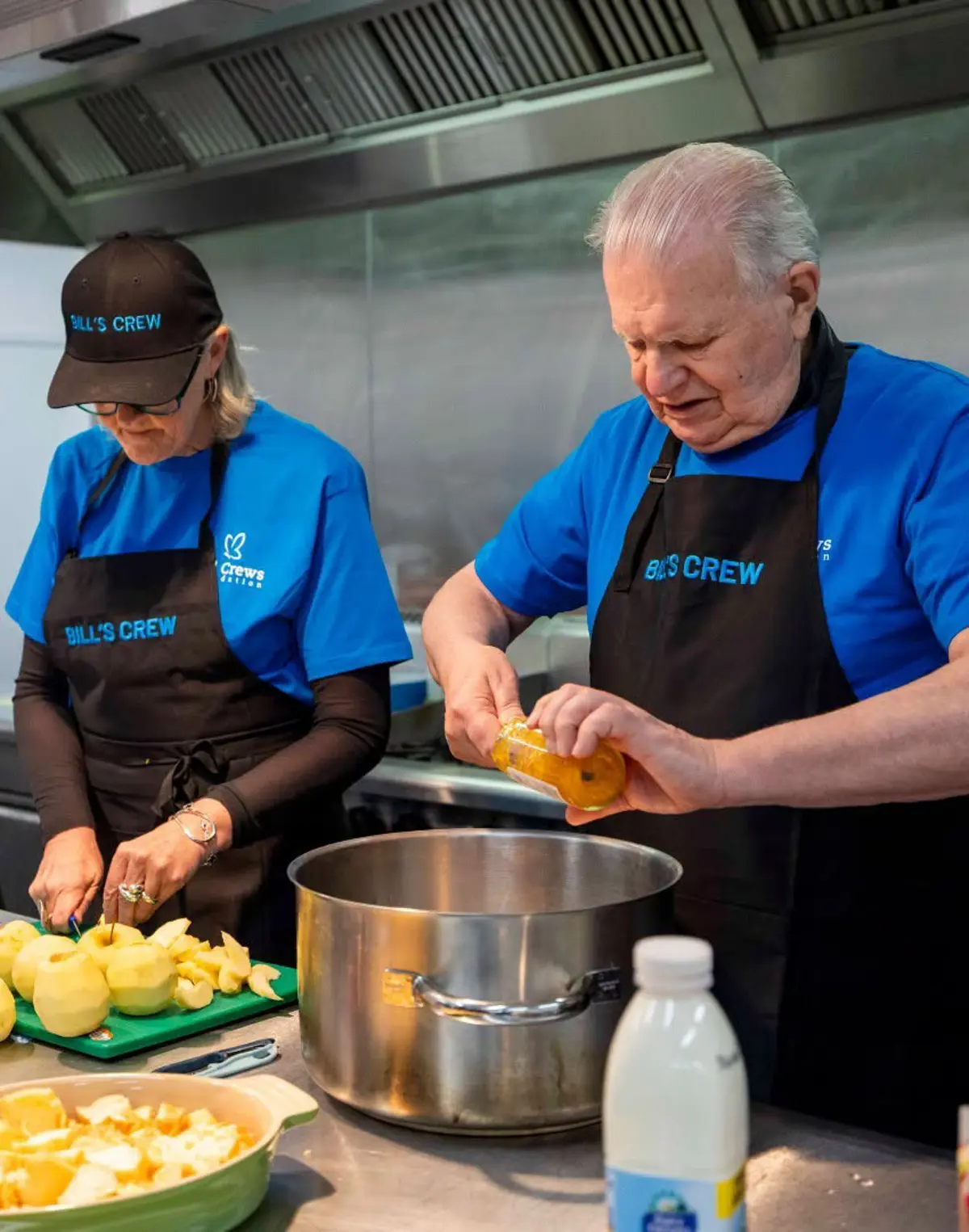
Over time, the work expanded into food services, homelessness support and education. Education remains part of the ministry today, with literacy programs in Sydney and Darwin supporting children with reading and learning.
Bill came to the Uniting Church after growing up Catholic and says the denomination gave him room to explore questions about faith, spirituality and life beyond death.
At theological college, he found teachers prepared to engage difficult questions rather than close them down. He also found a denomination capable of holding different expressions of faith alongside one another.
"That's the Uniting Church," he says, "And I love that."
That openness became important to the ministry that developed at Ashfield. The people arriving at the church did not always fit conventional ideas about church membership or religious life. Ministry often began with what was happening in front of him rather than an established program.
That approach sometimes brought Bill into conflict with church structures as the work expanded.
"There were times it was awful," he says.
But he also remembers those within the Church who backed the work.
"I had a lot of supporters as well."
For Bill, the tension raised an ongoing question about how institutions respond when ministry develops in ways their structures did not anticipate. He remains wary of allowing regulation to become a substitute for judgement, particularly when an emphasis on avoiding risk prevents people from responding to need.
Not all the changes at Ashfield can be measured through programs or services, many are captured in moments Bill still remembers decades later.
One involves Shirley Lomas, an Aboriginal woman connected with the church whose story as a member of the Stolen Generations was to appear in The Sydney Morning Herald.
The Sunday before publication, Lomas stood before the congregation and asked them to pray for her. The church gave her a flower and, the following day, the newspaper carried a photograph of her holding it.
Telling her story publicly took a toll.
The next Sunday she returned to Ashfield with friends. During Communion, her distress surfaced, and Bill remembers the sound of her grief filling the church.
After the service, the congregation did not stay for its usual coffee.
"Everyone went home, he says.
There was nothing simple to say.
"They're experiences you treasure," he says.
They have also carried a cost.
After 40 years, Bill is direct about an aspect of ministry that anniversary celebrations can overlook: it can be lonely.
“The big thing I want to get across is the loneliness of doing this,” he says.
People regularly tell him they would like to do the kind of work he has done. His response is that public ministry begins with something less visible.
“The first thing you've got to do is face your own internal loneliness.”
Listening repeatedly to people's experiences of homelessness, addiction, family breakdown, grief and trauma leaves its mark.
"You carry it with you," Bill says.
For Bill, psychotherapy has been one way of dealing with that weight. He says he has undertaken it weekly for 40 years, helping him examine his own responses rather than assuming that caring for others makes a minister immune from what they hear and witness.
His ministry also affected his family. The demands of public work could compete with life at home. He remembers one birthday when a church event clashed with a family celebration. Bill went to the church commitment while his family continued their party at home, placing a teddy bear in his chair.
"That's the other side of this," he says.
His marriage later ended, and Bill says rebuilding family relationships took years. The experience changed his understanding of ministry and of himself.
The Ashfield of 2026 is not the Ashfield to which Bill was called four decades ago. The community has changed, the Church has changed and the services operating from the site have changed. Bill has changed too.
Perhaps that is one of Ashfield’s enduring lessons is that churches change not only through strategies, structures or programs, but through the people they make room for.
And sometimes, the change begins with a knock on the door.